 What's New?
Document Actions
Machine Learning
Machine Learning offers tools for computational analyses of complex phenomena. Given a set of labeled observations, one trains a learning machine to be able to make accurate predictions about future observations.
For instance, given a set of known splice sites in the genome, a learning machine can recognize the location of other such sites. Machine Learning techniques detect and exploit statistical regularities that are hidden in existing observations without requiring an explicit model of the problem. Such data-driven approaches excel in situations where a detailed understanding of the underlying biological mechanisms is lacking but data is abundant, which is frequently the case in Genome Biology.
The group has been developing kernel-based algorithms capable of dealing with heterogeneous and structured input data derived, in particular, from biological sequences. Specifically, we have developed multiple kernel learning algorithms that allow the optimal combination of heterogeneous data through an elegant and theoretically sound framework. Additionally, we have developed very efficient string data structures that allow us, in combination with innovative SVM optimization techniques, to solve sequence analysis tasks with up to 50 million training examples and other tasks with 7 billion test examples. With these new developments we have enabled large-scale sequence analyses and established state-of-the-art learning techniques in the field of genomic sequence analysis. The application of these techniques has led to the most accurate genomic signal detectors that currently exist.
An important limitation of kernel methods is that the resulting prediction functions are difficult to interpret and thus to translate into biologically meaningful insights. For specific sequence kernels, we have therefore developed methods capable of elucidating the learning result. Taking the correlation structure of the features into account, importance scores are computed for each relevant feature.
The group has been developing suitable learning techniques that allow us to predict structured outputs on genomic sequences and, in particular, segmentations thereof. These techniques are used in various projects related to gene structure prediction, the analysis of transcriptional activity, and the identification of genomic polymorphisms (see Computational Genome Annotation and Computational Transcriptomics).
Research Projects
- Large Scale Learning with String Kernels
-
The goal of this project is to develop new sequence kernels that are particularly well suited for sequence analysis tasks as well as algorithms that efficiently compute the optimal SVM solution when using these kernels. 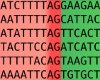
- Boosting
-
We consider so-called boosting algorithms which combine hypotheses generated by another learning algorithm to accurately solve two-class classification tasks. We are interested in their convergence properties as well as their accuracy in the presence of noise in the training data. 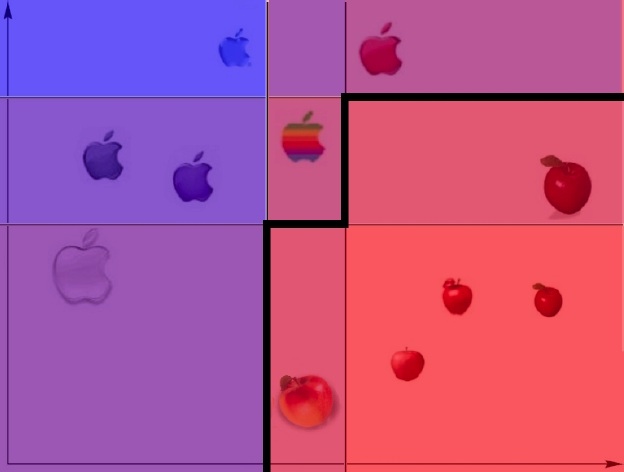
- Efficient Algorithms for Structured Output Learning
-
We work on the development of novel inference algorithms for predicting structured outputs, such as gene structures, RNA secondary structures, etc. We are particularly interested in designing efficient learning methods that can be used for problems arising in computational biology. 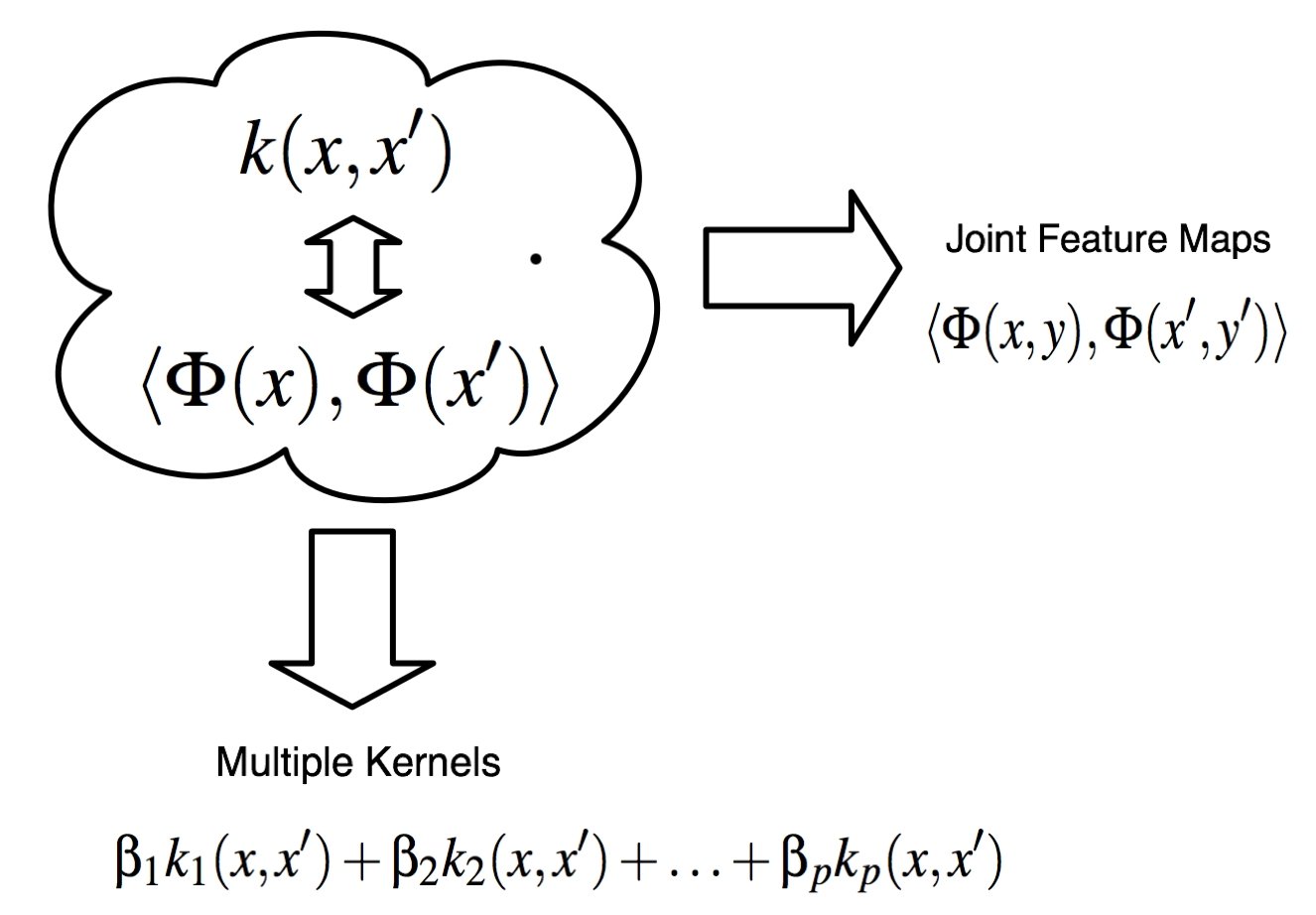
- Extracting Discriminative Motifs Based on SVM Detectors
-
At the heart of many important bioinformatics problems, such as gene finding and function prediction, is the classification of biological sequences. Frequently the most accurate classifiers are obtained by training support vector machines (SVMs) with complex sequence kernels. However, a cumbersome shortcoming of SVMs is that their learned decision rules are very hard to understand for humans and cannot easily be related to biological facts. In this project we aim to develop new techniques to improve the interpretability of predictive methods including SVMs. 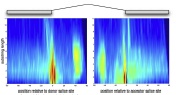
- Domain Adaption and Multi-task Learning
-
People specializing in this area
Publications
-
Zien, A, Krämer, N, Sonnenburg, S, and Rätsch, G (2009).
The Feature Importance Ranking Measure
In: Proc. ECML PKDD, ed. by W. Buntine, M. Grobelnik, D. Mladenic, J. Shawe-Taylor, vol. 5782/2009, pp. 694-709, Springer Berlin / Heidelberg, Springer, XXIX ed.. Lecture Notes in Artificial Intelligence.
 Printable file
-
Franc, V and Sonnenburg, S (2009).
Optimized Cutting Plane Algorithm for Large-Scale Risk Minimization
Journal of Machine Learning Research, 10:2157--2192.
Printable file
-
Warmuth, MK, Glocer, K, and Rätsch, G (2008).
Boosting Algorithms for Maximizing the Soft Margin
In: Advances in Neural Information Processing Systems (NIPS'08), MIT Press.
Printable file
-
Sonnenburg, S, Zien, A, Philips, P, and Rätsch, G (2008).
POIMs: Positional Oligomer Importance Matrices - Understanding Support Vector Machine Based Signal Detectors
In: Bioinformatics/Proc. ISMB 2008, vol. 24(13), pp. i6, Oxford University Press.
https://fml.ratschlab.org/suppl/POIM
Printable file
-
Graf, A, Bousquet, O, Rätsch, G, and Schölkopf, B (2008).
Prototype Classification: Insights from Machine Learning
Neural Computation.
Printable file
-
Ben-Hur, A, Ong, CS, Sonnenburg, S, Schölkopf, B, and Rätsch, G (2008).
Support Vector Machines and Kernels for Computational Biology
PLoS Computational Biology, 4(10):e1000173.
http://svmcompbio.tuebingen.mpg.de
Printable file
-
Schweikert, G, Widmer, C, Schölkopf, B, and Rätsch, G (2008).
An empirical Analysis of Domain Adaptation Algorithms
In: Proc. NIPS 2008. Advances in Neural Information Processing Systems.
/raetsch/suppl/genomedomainadaptation
Printable file
-
Rätsch, G and Sonnenburg, S (2007).
Large Scale Hidden Semi-Markov SVMs
In: Advances in Neural Information Processing Systems (NIPS'06), ed. by B. Schölkopf and J. Platt and T. Hoffman, vol. 19, pp. 1161-1168, Cambridge, MA, MIT Press.
http://www.fml.tuebingen.mpg.de/raetsch/projects/HSMSVM
Printable file
-
Zien, A and Ong, CS (2007).
Multiclass Multiple Kernel Learning
In: Proceedings of the 24th International Conference on Machine Learning (ICML), pp. 1191-1198, New York, NY, USA, ACM Press.
http://www.fml.tuebingen.mpg.de/raetsch/projects/protsubloc -
Sonnenburg, S, Rätsch, G, and Rieck, K (2007).
Large Scale Learning with String Kernels
In: Large-Scale Kernel Machines, ed. by Léon Bottou, Olivier Chapelle, Dennis DeCoste and Jason Weston. MIT Press, Cambridge, MA, chap. 4, pp. 73-104.
Printable file
-
Zien, A, De Bona, F, and Ong, CS (2007).
Training and Approximation of a Primal Multiclass Support Vector Machine
In: 12th International Conference on Applied Stochastic Models and Data Analysis (ASMDA).
/raetsch/suppl/pmsvm/primal-multiclass-svm
Printable file
-
Chapelle, O, Schölkopf, B, and Zien, A (2006).
Semi-Supervised Learning
The MIT Press, Cambridge, MA, USA. (ISBN: 978-0-262-03358-9).
http://www.kyb.tuebingen.mpg.de/ssl-book/ -
Sonnenburg, S, Rätsch, G, Schäfer, C, and Schölkopf, B (2006).
Large scale multiple kernel learning
Journal of Machine Learning Research, 7:1531-1565.
Printable file
-
Sonnenburg, S, Rätsch, G, and Schäfer, C (2005).
Learning interpretable SVMs for biological sequence classification
In: RECOMB 2005, LNBI 3500, pp. 389-407, Berlin Heidelberg, Springer-Verlag.
Printable file
-
Rätsch, G, Onoda, T, and Müller, K (2001).
Soft Margins for AdaBoost
Machine Learning, 42(3):287-320.
Printable file
